XING: Company Pages
Company pages, Kununu, and a design system for the B2B side of a 20-million-person network.
I was on the Company Pages team at XING, then the largest professional network in Germany, Austria, and Switzerland. The work was the public face of a company — profiles, jobs, reviews — while the stack moved from a Rails monolith to React.
Company Pages
XING had more than 20 million users. Company Profiles were the storefront: BMW, SAP, Siemens, and everyone else competing for people.
I also worked on a B2B dashboard for internal metrics, and on the design system that was supposed to make the B2B suite feel like one product.
The Company Pages had to be a single source of truth for candidates and investors.
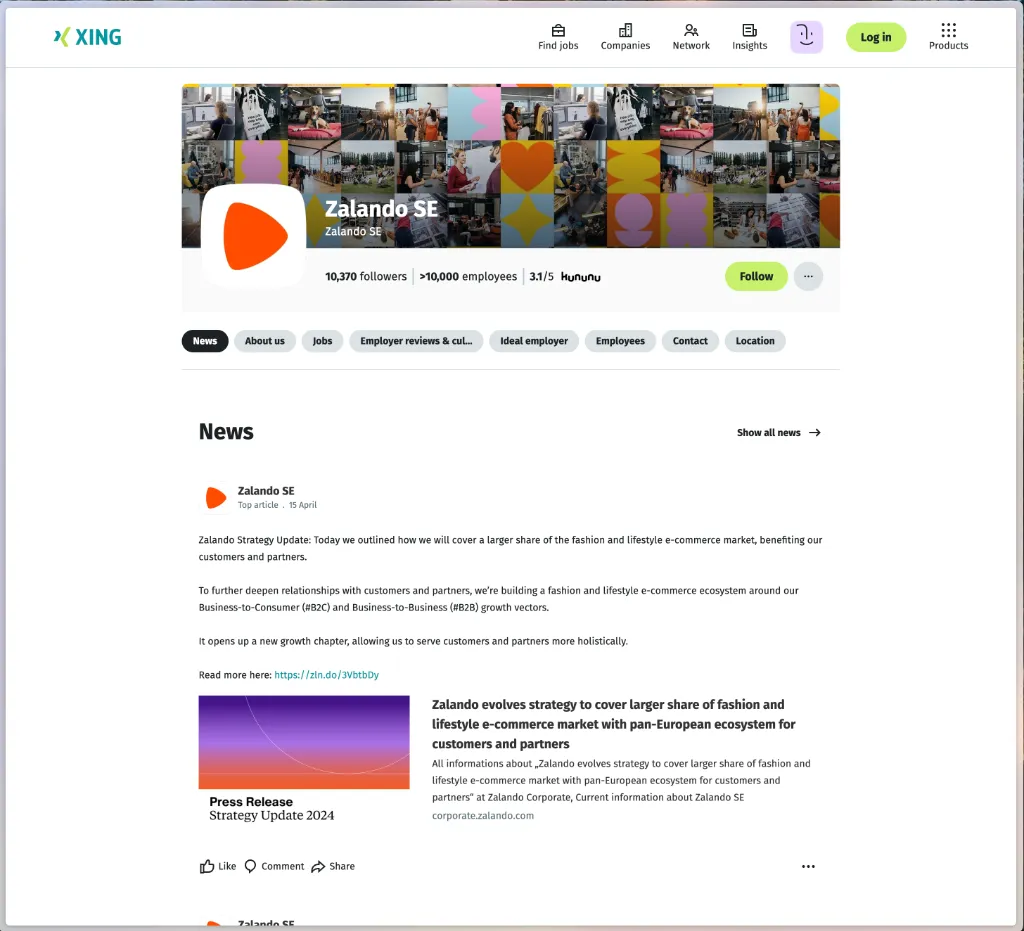
Kununu
XING had acquired Kununu, the employer-review platform. We folded reviews and salary data into the company page, so the marketing copy sat next to what it actually felt like to work there.
Jobs
The Jobs tab was the engine. Thousands of postings across DACH, rendered through company hierarchies that were rarely simple.
Mini-apps inside a monolith
Each tab on a Company Page — Home, Jobs, Employees, Reviews — was essentially a different mini-app, often owned by a different squad. This was microfrontends before the word got tired.
I joined while we were laying the React foundation and peeling components off the Rails monolith. The hard part was a seamless UI while those React apps still lived inside the older shell.
Design system for B2B
The B2B design system was a React library for dense data and enterprise forms. Analytics dashboard or job posting: same language.